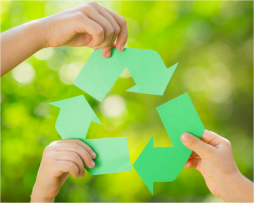
 When it comes to the environment, many schools’ curricula are already full of positive lessons about protecting the earth. Core topics such as recycling, waste reduction, energy efficiency, and the natural world contain important messages that children should learn as early as possible. At Modernize, we believe that teaching the next generation about caring for the environment is one of the best ways we can minimize the negative effects we have on the earth. Important topics like the ones mentioned above can never be repeated too often, so we’ve come up with a few creative ways to help bolster green lesson plans for all ages.
Recycling
Fortunately for educators, recycling is a topic that is well-rehearsed and fleshed out in most school curricula. Lesson plans tailored to a variety of ages are available from many online teaching sources and include the basic concepts of reducing, reusing, and recycling waste. If you want to expand upon your current recycling curricula, modeling recycling and waste reduction in daily classroom activities is an excellent way of helping children understand these processes in a tangible way. Placing used classroom materials in a classroom recycling bin or reusing them in a creative way instead of throwing them away will give your students ownership over their behaviors. Take this daily lesson one step further by establishing a classroom—or school-wide—recycling team or committee with regular collection schedules. You can also try hosting a school-wide recycling competition to see who can recycle the most over a period of time.

Learning about recycling doesn’t have to end with the classroom, of course. Plan a field trip to a local recycling center and learn about the recycling process from start to finish. Set take-home activities in which students can log their household waste and recycling over the course of a week (or month, etc.), then tally up the results in class and discuss ways students and their families can change their at-home habits and the potential benefits of these changes. Finally, link your recycling lesson plans to local and national government lessons by discussing current recycling regulations and debating whether or not the government should mandate recycling.
Energy efficiency
While talking about energy efficiency during science lessons can help your students to understand the basic principles of energy consumption, pollution, and global warming, the best way to teach them its benefits is through your actions. Turning off lights, appliances, and classroom computers when not in use and making use of dimmer switches and timers is a fantastic first step to get your students thinking in a concrete way about conserving energy. If these features and recommendations are not already available or enforced at your school, consider having your class start a petition for them with evidence-based data and reasoning to back up their cause. Another way to get students thinking about the energy we consume on a daily basis is by monitoring usage through smart thermostats and energy meters.

Lessons about energy efficiency are not complete unless you discuss renewable energy sources, so make sure your energy lesson plans include plenty of conversations about wind, hydroelectric, and solar power. There are many interesting ways you can demonstrate the power of these renewable sources to your students, but solar power is especially important because of its highly technical specifications and the percentage of solar users throughout the United States. Incorporate solar learning into your curricula by studying solar panels in action (if possible), hosting professionals from a local solar company, or making your own solar cell or oven from a DIY kit.
Food waste reduction
As with all methods of green living, the best way to teach students about food waste reduction is by modeling positive behaviors in school on a regular basis. Using lesson plans, conversations with local municipal employees, or trips to local municipal waste plants, you and your students can discuss the basics of food waste collection, including what exactly is included in green waste and what happens to food waste after it is collected. If your school doesn’t already have one, request a green waste bin for your cafeteria and/or classroom.

Putting theory into practice for food waste reduction can seem difficult, but the process of composting is actually fairly straightforward and provides an excellent learning opportunity for students. If you want your students to understand exactly how the process of recycling food waste works, consider making your own compost bin and turning your school’s green waste into fertilizer for school flower beds and monitor the decomposition project as an ongoing earth science experiment. School kitchen gardens made from homemade compost provide another excellent way of connecting students to the earth, teaching them how to grow and cultivate their own produce—if your garden is successful, you can even use your harvest in school meals.
The natural world
While talking about energy efficiency, recycling, and waste reduction are essential parts of environmentalism, a connection with the natural world is perhaps the most important thing you can provide for students in their green learning journey. Speak frankly with your students about the importance of the natural world and how our energy use and actions affect the environments and ecosystems of plants and animals. Linking to Earth Day resources already in place in curricula, you can begin ongoing activities such as investigating your local ecosystems, experimenting with gardening, and creating an outdoor classroom. While outdoors, monitor and track the life cycles and behaviors of creatures from the natural world, including butterflies, worms, and other insects or larger animals in your school playground.

Bridge the gap between earth sciences and current affairs by opening discussions and debates about greenhouse gases, pollution, littering, and their effect on the natural world. Current environmental government policies, field trips to cities, areas directly affected by climate change, or a local veterinary surgery can give students a first-hand experience of the state of the natural world.
Lauren Pezzullo is a writer, editor, and musicophile who’s passionate about vegetarianism and sustainable eating. As an editor for Modernize, she writes about energy-efficient living in the home. She’s currently writing her debut novel.
 The Voki Blog - Expanding Education